Solutions for Asbestos Free Environments (SAFE)

What Is Asbestos?
Last Updated: May 30, 2025
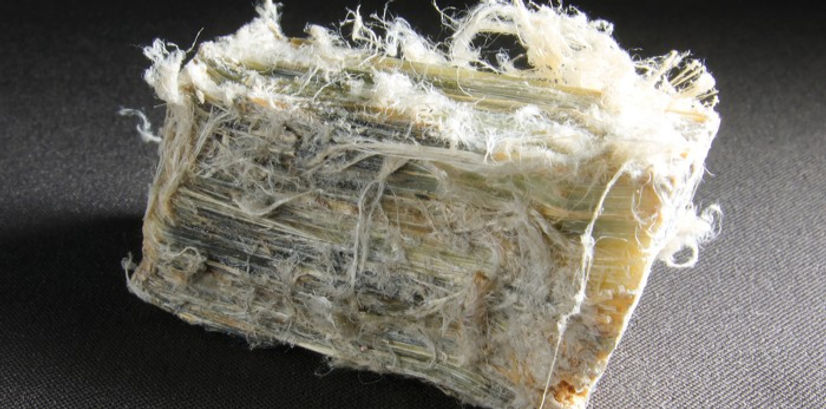
Visible fibers on chrysotile (white asbestos).
Credit: Shutterstock.
Overview
Asbestos is a carcinogenic substance, meaning it has the capacity to cause cancer, and it is possible that your home contains it, especially if it was built before the 1980s. However, there may still be some things that you may not know about asbestos, and what makes it incredibly dangerous to human health. For example, you might have questions such as "what should I do if I have asbestos in my home?" and "will I develop cancer after I'm exposed?"
You might be also be wondering on why asbestos was so popular throughout the 1930s to the 1980s if it was apparently killing people. So far, the U.S. has mostly phased out its usage on asbestos, but it is still found in many products that should otherwise not be containing it, even with newer regulations in the U.S.
Despite this, staying informed, alongside making wise choices, about asbestos can help keep yourself and others safe around any materials that are suspected to be containing it.
What Asbestos Is
Asbestos is not a man-made substance. Instead, asbestos is a group of naturally occurring fibrous silicates (which are Earth's most prevalent group of minerals). In its natural state, asbestos appears as a rock, sometimes with stringy or pointy fibers protruding out of it.
Notable qualities from asbestos are that they are heat, corrosion, and sound resistant. These minerals also do not conduct electricity, are not easily broken down by bacteria, and are lightweight. Asbestos fibers are flexible enough to be woven. These traits made asbestos popular in many products prior to the 1980s.
Asbestos fibers are extremely thin and tiny, where a microscope is necessary to be able to see them. It is possible to fit over a thousand fibers in a single human hair.
Types of Asbestos

There are six minerals recognized as types of asbestos:
-
Chrysotile (white asbestos)
-
Amosite (brown asbestos)
-
Crocidolite (blue asbestos)
-
Tremolite
-
Actinolite
-
Anthophyllite
In the U.S., the most encountered type is chrysotile (white asbestos). The second-most common asbestos is amosite (brown asbestos), followed by the third-most common crocidolite (blue asbestos).
Tremolite, actinolite, and anthophyllite are generally not sought for commercial use, but they have been found contaminating other products, including the more commercialized asbestos types.
Additionally, the six asbestos types are also separated into two categories: serpentine and amphibole asbestos.
Serpentine asbestos can be identified by its curly fibers that gives it a "serpent" appearance. Chrysotile is the only serpentine asbestos.
Amphibole asbestos fibers are long and needle-like. All asbestos types excluding chrysotile are amphiboles.
Tremolite asbestos fibers on muscovite.
Credit: Aram Dulyan
Forms of Asbestos Materials
When it is used in products and materials, asbestos can appear in friable or non-friable (bonded) forms.
Between the two material types, friable asbestos is the most fragile. A human hand can easily crumble, or otherwise fray, these materials. This is attributed to its generally higher asbestos content than non-friable asbestos.
Friable asbestos is more dangerous than non-friable asbestos because they are easier to disturb through minimal stress, and can release more fibers airborne due to its usual higher content.
Friable asbestos includes, but is not limited to:
-
Acoustic paints
-
Insulation
-
Spray-on coatings
-
Aged or damaged non-friable products
Non-friable asbestos poses limited risk unless it is disturbed by cutting, scraping, and any other activity that would inflict damage. It has also been referred as bonded asbestos as the materials are more durable, thus less susceptible to being broken down by hand.
Non-friable asbestos generally has less asbestos content than friable forms. This does not mean that non-friable materials are completely safe to handle. Over time, non-friable products can deteriorate and become friable from age and damage.
Non-friable asbestos includes, but is not limited to:
-
Cement sheeting
-
Gaskets
-
Siding
-
Vinyl floor tiles
Where Is Asbestos Found?
It is virtually impossible to live your life completely without any asbestos exposure of some form. Low levels of asbestos are present in the air, soil, and water. However, it is unlikely that you will develop an asbestos-related disease from these minimal exposures; most of those fibers get trapped by your mucus, and are rejected by the body. The main risk arises from consistent exposure.
Even though the U.S. has mostly phased out its asbestos usage, it still remains present in many buildings, such as residential homes and schools, that were built before or around the 1980s. Due to its versatility, asbestos has also been used for a variety of products.
Asbestos has been found or was used in including, but not limited to the following:
-
Automotive parts
-
Ceiling and flooring
-
Countless consumer products
-
Fabrics
-
Fire retardants
-
Gaskets
-
Insulation
-
Jewelry and gemstones
-
Packaging
-
Papers
-
Plastics
-
Roofing
-
Siding
-
Spray-on coatings
-
Textured paints
-
Wallboards
While many of these asbestos-containing products are discontinued, some products are still at risk such as jewelry. For example, certain gemstones may contain asbestos fibers inside of them, which if broken could put one's health at risk for exposure.
Health Risks
All six asbestos types are carcinogens, like many of the chemicals found in tobacco smoke. If asbestos fibers are inhaled or ingested in the body, they can cause potentially life-threatening diseases such as asbestosis, lung cancer, and mesothelioma. Most commonly, these fibers are inhaled where they end up inside the lungs. These fibers can be extremely difficult for the body to remove.
The type of asbestos influences how hazardous and more likely it is to cause serious health effects. Amphibole asbestos types, especially crocidolite (blue asbestos), are more dangerous than serpentine asbestos as their fibers are needle-shaped, meaning that they can easily lodge into tissues compared to the more curly fibers seen in chrysotile. However, chrysotile is far from by any means "safe" for the body to inhale or ingest.
There is no virtually no indication to determine whether someone has initial asbestos exposure, as they lack a smell and taste. People are at most risk for asbestos exposure in occupations that heavily involve working around it.
Asbestos can cause a range of cancers, most notably lung cancer and mesothelioma. However, other cancers may be caused from exposure as well such as laryngeal, ovarian, and throat cancer.
Asbestos-related diseases generally have a latency period. This means that you will not experience immediate symptoms after you were initially exposed; it takes a great period of time for them to appear. In asbestos-related diseases, the latency period usually takes several decades for symptoms to surface.
Asbestosis
Asbestosis is a chronic and long-term pneumoconiosis (a group of lung diseases caused by inhaling dust) that affects the lungs caused exclusively by inhaling asbestos fibers. The severity of asbestosis varies, where it can be life-threatening in certain cases.
In asbestosis, asbestos fibers become embedded in the lung tissue, causing inflammation. The immune system fails to remove these fibers, promoting fibrosis or scarring in the lungs. Fibrosis of the lungs makes breathing difficult, sometimes completely shutting down lung function.
Some asbestosis patients can continue to live normal lives if given adequate treatment, while others may need to receive supplemental oxygen or a lung transplant.
While asbestosis is not a type of cancer, it can increase one's risk of developing lung cancer or rarely mesothelioma.
Lung Cancer
Lung cancer can be caused by asbestos exposure besides tobacco smoking. Lung cancer is a serious respiratory disease that affects the lungs. It can be either non-small cell lung cancer (NSCLC) or small cell lung cancer (SCLC).
Asbestos-related lung cancer can be caused by asbestos fibers inflicting further damage to a particular area of lung tissue. This can alter the DNA in lung cells, leading to mutations that transform damaged cells into cancerous cells.
Tobacco smoking aggravates the risk of developing asbestos-related lung cancer. Smoking and asbestos have a synergistic relationship, meaning that your risk or symptoms worsens when combined together. This implies that an asbestos exposed smoker will have a greater likelihood of developing lung cancer than an asbestos exposed non-smoker.
Asbestos-related lung cancer is often overlooked, as many doctors classified many of cases to be caused by smoking, despite the link between asbestos and lung cancer being apparent. While mesothelioma is heavily associated with asbestos exposure, you are more susceptible for developing lung cancer than it.
Mesothelioma
Rarely, asbestos exposure may develop into mesothelioma, an extremely aggressive cancer that affects the mesothelium (a thin membrane layering the majority of the body's internal organs). It is primarily caused by asbestos exposure, where it most often develops in the pleura that lines between the chest and lungs.
Beyond the pleura, mesothelioma is also known to affect the peritoneum, although it is also less commonly known to affect the pericardium and, very rarely, the tunica vaginalis.
Mesothelioma is extremely difficult to treat and has a poor prognosis. Patients rarely live up to two-years with given treatment after diagnosis.
Mesothelioma should not be confused with lung cancer, as it affects the mesothelium rather than the lungs. Additionally, smoking will not increase your risk for mesothelioma, but will for lung cancer.
Occupations at Risk
The majority of asbestos exposure occurs at occupational jobs, especially in "blue-collar" work such as manufacturing, construction, and demolition. Other jobs that are at an increased risk of asbestos exposure include automotive repair, chloral-kali production, firefighting, military work, and shipyard work.
Historically, at least in the U.S., miners were especially at a high risk for asbestos exposure. When they mined the mineral for its industry without personal protection equipment (PPE), many were exposed and eventually developed serious asbestos-related injuries.
Secondhand Exposure
Families of workers are also at risk of secondhand exposure, where fibers can be brought home on clothing and tools. Secondhand exposure can also happen environmentally. Families who live near factories or natural deposits can be exposed if microscopic fibers are airborne.
Asbestos occurring naturally in rock and soil rather than in commercial products or mining operations are referred as naturally occurring asbestos (NOA). NOA that has been disturbed can send fibers airborne, posing health risks of inhalation.
History
Asbestos in the Industrial Era
Asbestos was once widely used in many everyday products. It was especially popular as an effective insulator in many homes and commercial buildings.
A notable product that contained asbestos included Kent filter cigarettes that were intended to reduce the harmful effects traditionally associated with smoking. These cigarettes used crocidolite (blue asbestos), which is the most dangerous type, in its "Micronite" filters. This eventually lead to series of lawsuits against the brand.
Before the health risks became more apparent, asbestos was discovered as a highly versatile mineral. Because of its incredible durability, adding it in many things increased its durability. For example, an asbestos-based blanket will not burn if thrown into a fire pit, unlike traditional blankets that are made out of fabrics.
Interestingly, there is also evidence suggesting that asbestos has been used since the Stone Age, where archeologists discovered ceramic pots that were reinforced with asbestos fibers.
The asbestos industry was heavily profitable in the industrial times, where many manufacturing companies such as Johns-Manville and Owens Corning were among some of the biggest producers.
Miners serving those companies mined so many asbestos, where it was heavily commercialized as the "miracle mineral" due its incredible durability while also remaining affordable. Eventually, many of those miners and other workers for those companies developed serious health effects from asbestos exposure.
The increased health concerns of asbestos threatened the industry. Similar to how the tobacco companies feared the public knowing that their products can cause lung cancer, the asbestos industry manipulated and withheld medical information to downplay the dangers. Those same companies later filed for bankruptcy to relieve themselves from the incoming lawsuits.
Asbestos Today
In recent times, in the U.S., the majority of asbestos remains in buildings, particularly being present in most older materials and buildings despite its industry falling out of favor. Asbestos that is still remaining in older buildings or products is sometimes referred to as "legacy asbestos."
Asbestos remaining inside older materials and buildings remains a serious health hazard to many occupations for those who work around with it. For example, workers who are part of demolition and renovation labor are at risk of being exposed when disturbing asbestos-containing materials.
Every country has their own stance on asbestos regulations, with some being more lax than others. The world's largest producer of asbestos is Russia, while the largest importer of it is India. Currently, over 50 countries have ban the usage of asbestos.
Asbestos-related diseases continue to claim over a hundred-thousand lives in year. It is thought that approximately 255,000 people die from asbestos-related diseases. However, there are factors that can potentially affect this statistic, as many cases have been underreported in many countries.
While the U.S. now has laws against producing and imports of asbestos, chrysotile (white asbestos) was generally exempt in most cases, with the EPA only recently banning all asbestos imports in 2024 due to previous overturns in regulation. Even with this ban, certain fields are allowed to use it until after a set deadline to be able to phase it for an alternative.
Many of the former asbestos manufacturing companies have created asbestos trust funds to compensate former workers who could have developed asbestos-related injuries while working for them. A lawyer specialized in asbestos can help asbestos victims file a claim, and win a verdict.
Asbestos Safety
The most effective method to protect yourself from asbestos exposure is simply avoiding it or at least reducing exposure. If you must be around asbestos, wear the appropriate protective equipment.
As asbestos fibers pose limited dangers if they are undisturbed, refrain from any activity that would otherwise disturb or release the fibers airborne. For example, sweeping asbestos dust with a broom presents a health risk.
Asbestos Removal
If your home is built before the 1980s, it is likely that your home has asbestos in it. This, however, does not always guarantee that every home built around that time will have it. Simply looking at anything in your home that is presumed to contain asbestos does not mean it will definitely contain it. Samples must be sent to a lab to confirm that your home undoubtedly has asbestos.
Do not attempt to remove any asbestos-containing materials or materials that are suspected to contain asbestos, unless you are a licensed professional wearing personal protective equipment (PPE).
Even if the material in question may not have asbestos, it is better to leave it for a licensed professional to address it. While there are federal laws that technically allow the homeowner to remove asbestos materials, it is highly stressed that hiring a licensed abatement contractor is the safest option. In some cases, simply leaving asbestos-containing materials alone is the best option.
While hiring for abatement can be expensive, it is better to prioritize your safety than put your health at risk for developing potentially life-threatening diseases to save money.
Suggestions for Yourself
The risks of asbestos exposure are real, and you will need to take precautions whenever around it or suspected materials. Because of that, making sure others are aware of its hazards and practicing adequate safety measures are very important.
What you can do is educate others (such as your family and friends) about the dangers of asbestos, alongside practicing methods you and others can limit being around it, or if better completely avoid it.
Raise Awareness
Informing other people about asbestos hazards or raising awareness is a simple, yet a reliable method to protect others from asbestos exposure. Sharing information helps others, such as your family and friends, to become more wary about its potential dangers on human health.
This can prevent others from engaging in potentially dangerous activities whenever around materials that are suspected to contain asbestos, like attempting to renovate on their own in a home that could disturb asbestos without PPE.
What if I'm Exposed?
Past asbestos exposure can eventually develop into asbestos-related diseases later in life with limited notice. If you suspect that you have past asbestos exposure, seek out your doctor who may refer you to an asbestos-related disease specialist. When you speak with your medical provider, bringing up your history of exposure will be important for a potential diagnosis of an asbestos-related disease.
With your asbestos medical history in consideration, your medical professional may suggest conducting routine screening, alongside other diagnostic tests. Receiving regular screenings ensures that you are able to catch an asbestos-related illness early, such as a tumor, where treatment will generally be more successful than after it progresses. This early detection leads to improved prognosis and outcome.
Your life habits may influence your susceptibility to developing an asbestos-related disease. Good habits such as eating healthy and regular exercise will lower your risk. Avoiding or quitting smoking is also beneficial, as it reduces your risk for lung cancer.
It is uncertain how many asbestos fibers that the body needs to inhale in order to develop an asbestos-related disease. What is understood, however, is that inhaling fibers increase the chances of that risk. Many medical experts conclude that there is no "safe level" of asbestos exposure.
While it is unlikely that minimal asbestos exposure will eventually develop into a serious disease, it is recommended to see a doctor, as even limited exposures have caused cancers in some cases.